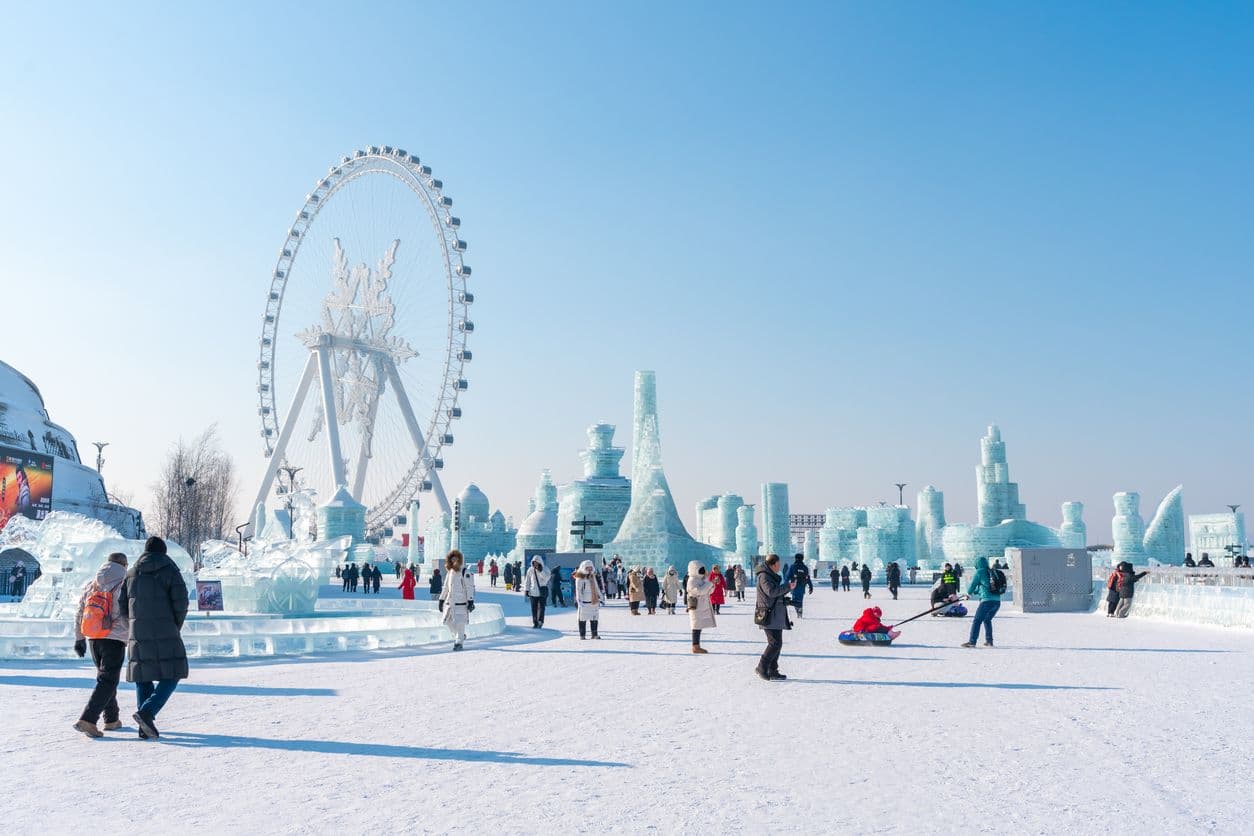
The Harbin International Ice and Snow Sculpture Festival in Heilongjiang, China, stands as a premier example of logistics and engineering operating within extreme environmental constraints. Every winter, a temporary metropolis emerges, constructed entirely from ice blocks harvested from the Songhua River. These are not simple carvings but complex architectural works involving multi-story towers and walkable bridges. The success of this massive undertaking relies less on artistic intuition and more on rigorous meteorological analysis.
Harvesting Nature: Historical Data for Planning
The project lifecycle begins with resource acquisition. The Songhua River must freeze to a specific thickness and consistency to yield blocks capable of supporting heavy loads. Harvesting too early results in weak ice, while waiting too long compresses the construction schedule. Event planners could utilize the OpenWeather One Call API 3.0, specifically the Daily Aggregation feature, to mitigate this uncertainty. By analyzing decades of historical weather data, organizers identify the statistical probability of the river reaching optimal freezing points by early December. This long-term climate intelligence allows production schedules to align with the natural behavior of the river, ensuring labor and machinery are deployed only when the environment is ready.
Logistics on Ice: Securing the Supply Chain
Once the ice is harvested, the focus shifts to logistics and transport. Moving thousands of tons of fragile ice from the river to the festival site involves a fleet of heavy trucks navigating winter roads. This is where the OpenWeather Road Risk API might become a vital tool. Transport managers might use this service to monitor weather conditions along specific routes, receiving alerts for ice formation, heavy snowfall, and visibility issues. Ensuring the safe and timely delivery of the raw material is critical, as delays or accidents during transport can derail the entire construction timeline.
Real-Time Monitoring: Ensuring Structural Integrity
During the operational phase, the structural integrity of the sculptures and the safety of millions of visitors depend on real-time atmospheric monitoring. Ice is a dynamic material that reacts to thermal shifts. A sudden rise in temperature or wind speed can compromise the stability of tall structures. Organizers might use the Global Weather Alerts from OpenWeather to receive push notifications regarding severe weather events. If a blizzard or a sharp temperature spike is detected, safety officers can immediately close specific zones or evacuate high-risk areas.
The Metrics of Safety
The integration of these diverse meteorological datasets highlights the specific parameters required to maintain a safe winter environment:
- Temperature Thresholds dictate the core stability of the ice and prevent thermal shock fractures.
- Solar Irradiance levels are monitored to prevent surface sublimation and loss of sculptural detail.
- Wind Speed data is essential for calculating structural load on tall spires and determining wind chill risks for visitors.
- Humidity levels are tracked to prevent frost accumulation that can obscure internal lighting systems.
- Precipitation forecasts allow maintenance teams to clear snow from clear ice surfaces immediately.
The Harbin International Ice and Snow Sculpture Festival proves that extreme environments can be managed through precise data application.By using climate data, organizers can transform a volatile natural phenomenon into a predictable destination. Weather data serves as the foundational infrastructure that keeps the frozen city standing.