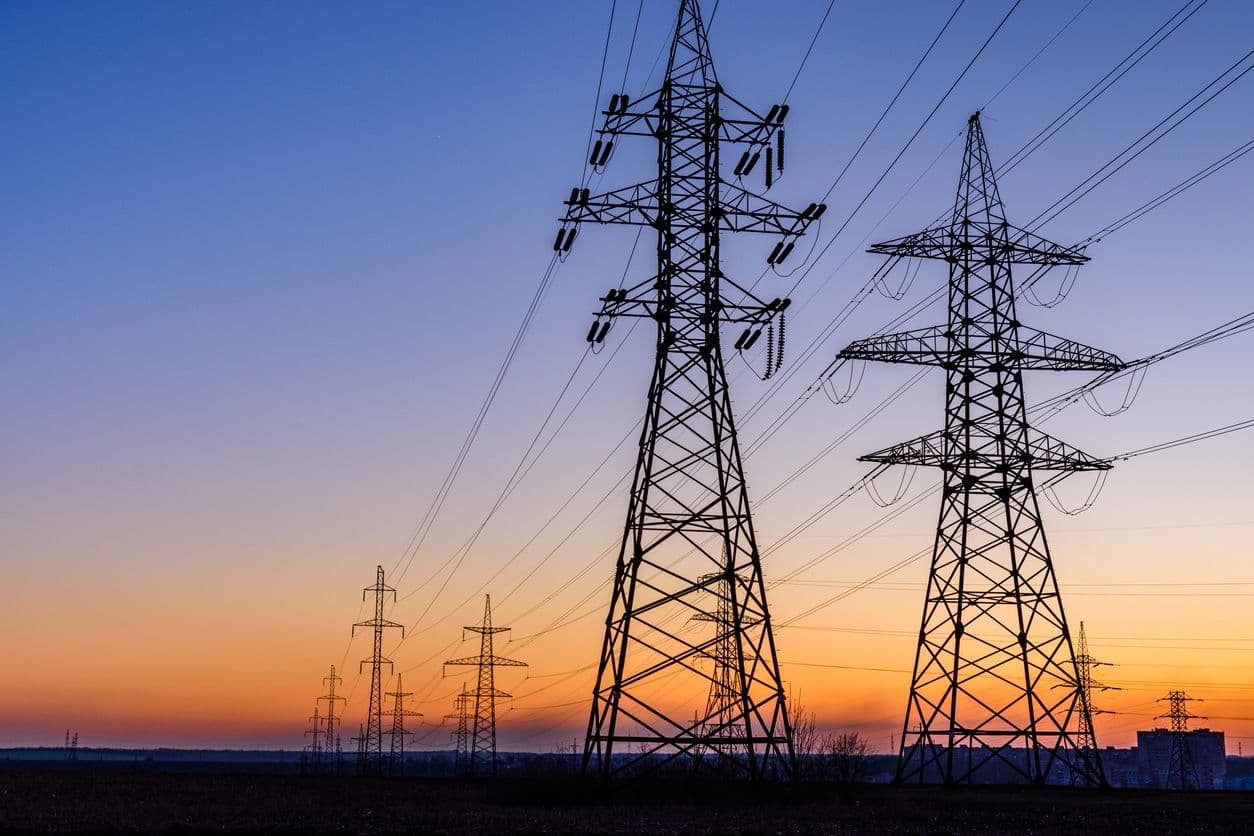
Upgrading national power grids is an expensive and time consuming process. Building new transmission towers and laying fresh cables requires years of planning, securing planning permission, and heavy capital investment. As the global transition to renewable energy accelerates, grid operators face a bottleneck. Wind and solar farms are ready to generate clean electricity, but the existing wires often lack the capacity to transport it. The solution to this infrastructure challenge relies on artificial intelligence and precise weather data to push more power through the lines we already have.
The Physics of Power Transmission
Electricity flowing through a wire generates heat. If a transmission line gets too hot, the metal expands, causing the heavy cables to sag closer to the ground. This sagging creates a serious safety hazard and can lead to ground faults or widespread blackouts. To prevent this, grid operators have historically used static line ratings. A static rating assumes the worst possible environmental conditions, such as a scorching summer day with absolutely no wind.
Operating under these rigid assumptions means that transmission networks are frequently underutilized. On a cool and breezy day, the wind actively cools the overhead cables, allowing them to safely carry significantly more electricity without overheating. Recognizing this physical reality has led to the adoption of dynamic line rating technology. By monitoring local conditions, utilities can continuously adjust the safe operating limits of their infrastructure.
Real World Success in Grid Modernization
Implementing dynamic line rating has proven remarkably effective in practice. In the United States, grid modernization projects are utilizing environmental monitoring and artificial intelligence to calculate exact thermal limits in real time. This approach has allowed some American utility companies to boost their transmission capacity by up to fifty percent during favorable weather conditions.
Similarly, in Malaysia, the national utility provider launched a pilot project to optimize its high voltage network. By moving away from conservative static limits and embracing dynamic ratings based on ambient conditions, engineers found that actual capacity was thirty percent higher than the static rating for the majority of the time. These gains mean more clean energy can flow to urban centers without the need to construct a single new tower.
Integrating OpenWeather for Grid Resilience
To safely operate a dynamic grid, utility companies require highly accurate and localized meteorological information. This is where OpenWeather Current & Forecast Collection becomes an essential tool for infrastructure management. Grid operators use this specific data feed to ingest precise wind speed, wind direction, and ambient temperature readings directly into their artificial intelligence models.
When a stiff breeze picks up near a critical transmission corridor, the current weather data feed instantly reflects the change. The software then calculates exactly how much additional current can be safely pushed through that specific section of the grid. By relying on precise data rather than broad estimates, operators avoid thermal overload while maximizing the utility of every cable.
Visualizing Capacity with the OpenWeather Energy Dashboard
Engineers and operators also need to visualize these changing variables to make informed and immediate decisions regarding power routing. The OpenWeather Energy Dashboard provides a comprehensive interface designed precisely for this level of grid management.
Through the OpenWeather Energy Dashboard, grid operators can monitor widespread temperature drops or incoming wind fronts across their entire land based network. This visibility allows teams to proactively adjust power flows before bottlenecks occur. When a wind farm experiences a surge in production due to a storm system, operators checking the OpenWeather Energy Dashboard can verify that the local transmission lines are receiving enough wind cooling to handle the sudden spike in electricity generation.
The transition to a smarter grid driven by accurate meteorological insights offers several major advantages:
- Maximizing the return on investment for existing electrical infrastructure
- Reducing the need to curtail renewable energy generation during peak production hours
- Enhancing network reliability by preventing overheating and dangerous cable sag
- Accelerating the transition to green energy without waiting for new construction projects
A Resilient Energy Future
Optimizing the electrical grid is no longer just an engineering challenge. It is fundamentally a data challenge. By combining advanced artificial intelligence with highly accurate environmental metrics, utility companies can unlock the hidden potential of their existing networks, safely delivering more power to consumers.