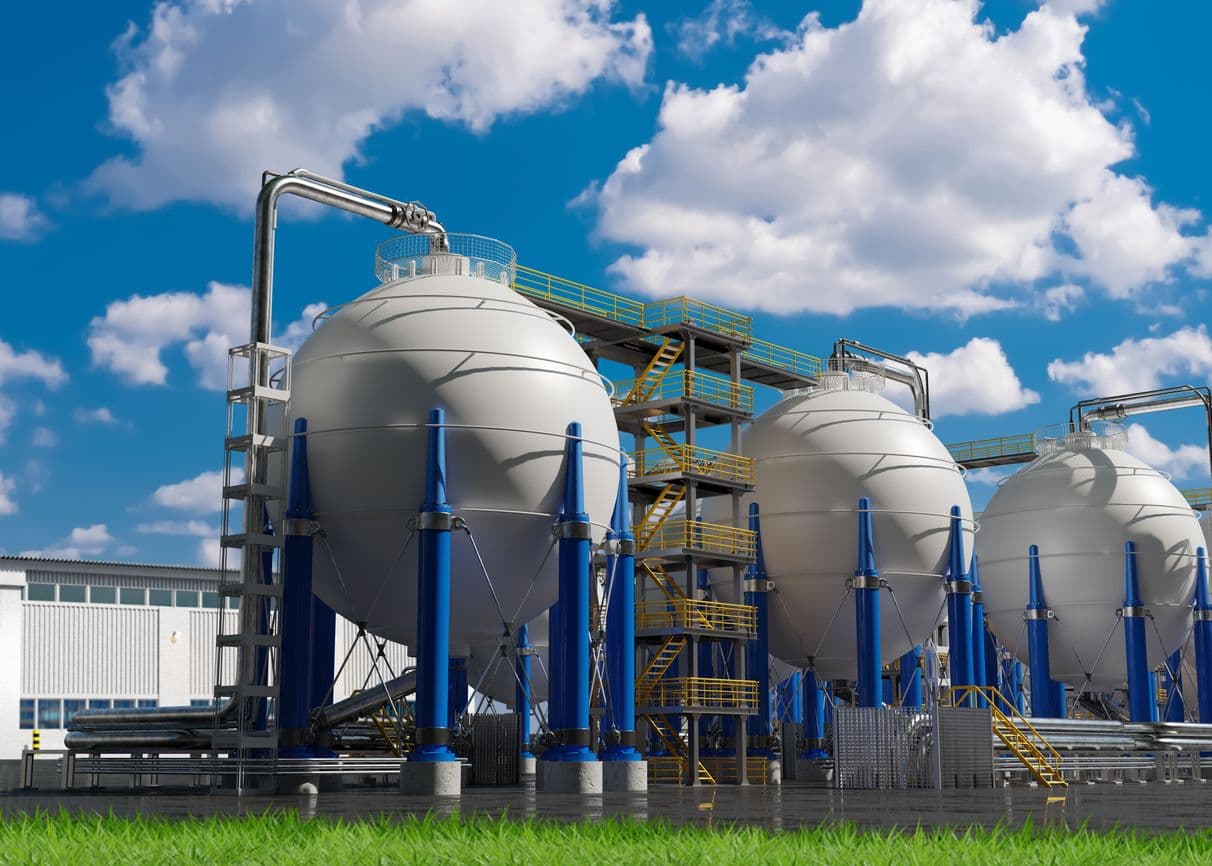
The transition to a sustainable energy future necessitates innovative approaches to energy storage. Intermittent renewable sources like solar and wind power require reliable storage solutions to ensure a stable and consistent electricity supply. Among the various promising technologies, Liquid Air Energy Storage (LAES) stands out for its scalability and ability to store energy for extended durations. In the United Kingdom, Highview Power has been proving this technology for years: its 5 MW Pilsworth demonstrator near Bury, Greater Manchester, has been operating since 2018, and its commercial-scale successor, the 300 MWh Carrington facility at Trafford Energy Park, is now under construction, with first grid-stability services due online in 2026.
Understanding Liquid Air Energy Storage
LAES technology operates on a straightforward principle, harnessing the energy stored in extremely cold liquid air. The process begins with using electricity, often surplus renewable energy, to cool ambient air down to −196°C. At this cryogenic temperature, air liquefies and is then stored in insulated tanks at atmospheric pressure. When electricity is required, the liquid air is pumped from the tanks, reheated, and rapidly expands back into a gaseous state. This forceful expansion drives a turbine, generating electricity that is fed back into the grid.
The LAES system offers several advantages. It is a long-duration storage solution, capable of storing energy for many hours, days, or even weeks. It is also scalable, meaning plants can be built to various capacities to meet different grid demands. Furthermore, liquid air is a non-flammable and non-toxic substance, making it a safe and environmentally benign storage medium.
The Crucial Role of Ambient Weather Conditions
While the core principles of LAES are consistent, the efficiency of the liquefaction process is significantly influenced by ambient weather conditions. Specifically, the temperature and humidity of the surrounding air play a critical role in how much energy is required to cool and liquefy the air.
- Temperature: Cooler ambient air requires less energy to reach the cryogenic temperatures necessary for liquefaction. This translates directly into higher energy efficiency for the plant.
- Humidity: Air with lower humidity contains less water vapor. Water vapor can freeze during the liquefaction process, potentially leading to ice formation within the system, which can reduce efficiency and increase maintenance requirements. Drier air streamlines the cooling process.
Optimizing the liquefaction cycles by considering these weather variables can lead to substantial improvements in the overall energy output and economic viability of an LAES plant.
Leveraging Weather Data for Enhanced Efficiency
Highview's Pilsworth demonstrator has shown how these plants perform in real UK conditions; for commercial-scale successors like Carrington, integrating precise weather data into operational planning will be able to unlock significant efficiencies. Operators can use detailed weather information to strategically schedule the energy-intensive compression cycles during periods when conditions are most favorable.
Consider a scenario where an LAES plant is planning its daily operations. By accessing accurate and localized weather forecasts, operators can identify the coolest and driest parts of the day or night. For example, during a hot summer day, the coolest and driest air might occur in the early hours of the morning. Scheduling the liquefaction process during this window would maximize the energy output for a given electricity input.
This proactive approach to energy management is greatly aided by reliable weather intelligence. OpenWeather's Current Weather and Forecast Collection offers a comprehensive solution for this type of operational optimization. This data provides real-time conditions and predictions for temperature, humidity, and other relevant meteorological parameters, empowering operators to make informed decisions.
Practical Applications of Weather Intelligence
To illustrate the practical benefits, consider these points:
- Scheduling liquefaction during anticipated cold fronts can significantly reduce energy consumption.
- Identifying periods of low humidity can minimize the potential for ice formation and improve system longevity.
- By combining historical weather patterns with current forecasts, operators can develop sophisticated predictive models for optimal operational windows.
- Access to hyper-local weather information, often available through advanced API services, ensures that decisions are based on the most relevant conditions for the specific plant location.
Furthermore, integrating a solution such as OpenWeather's Weather Maps Collection can offer a visual representation of atmospheric conditions, allowing operators to see broader weather patterns that might impact local conditions over several hours or days. This visual tool can complement numerical data, offering a more holistic understanding of the evolving weather environment.
Local community energy initiatives and government-backed clean energy projects could similarly benefit from incorporating precise weather data into their planning stages and ongoing operations. By understanding how ambient conditions impact various energy technologies, these projects can optimize their designs and maximize their contributions to a sustainable energy grid.
A Future Powered by Intelligent Storage
The development of advanced energy storage technologies like LAES is a vital component of the global effort to decarbonize energy systems. Highview Power's journey from the Pilsworth demonstrator to the commercial-scale Carrington plant demonstrates the practical application of these innovations. By judiciously integrating environmental intelligence, specifically detailed weather data, the efficiency and economic performance of these critical energy storage assets can be further enhanced, ultimately accelerating the transition to a cleaner, more reliable energy future for communities across the UK and beyond.