In this new series of articles, we take a closer look at some of the new and innovative solar energy technologies that are making their way out of the research lab and into everyday use.
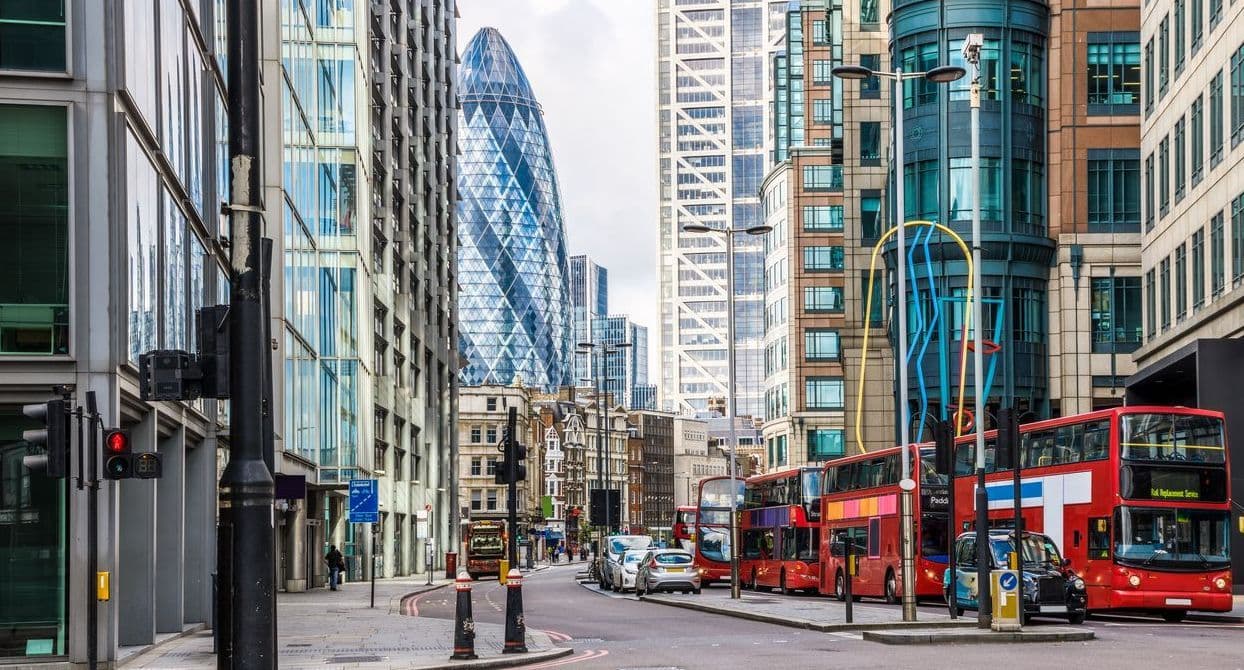
We start with the urban environment, and see how the traditional red London buses we see each day around our OpenWeather Gherkin office might not be the only ‘double decker’ technology in the area.
Urban environments present unique challenges for solar energy capture due to the lack of large areas of land that can be dedicated to solar installations. Traditional silicon solar panels require substantial surface area to generate meaningful power output. This limitation has historically restricted the viability of residential solar generation in major cities. However, a new generation of photovoltaic cell technology is now being developed that might overcome this issue.
This new PV technology, sometimes known as double decker solar panels, layers two distinct materials together to capture a significantly broader spectrum of sunlight than traditional alternatives. The fundamental design pairs a traditional silicon base with a top layer of perovskite. This combination allows the panels to absorb different wavelengths of light and dramatically increases overall efficiency. A UK company is currently rolling out these high efficiency panels across the United Kingdom. Their deployment aims to extract the maximum amount of electrical power possible from residential roof spaces.
Adapting to the Urban Canopy
Densely built cities are notoriously difficult environments for consistent solar energy generation. Roof space is cramped and neighboring buildings frequently cast long shadows over potential installation sites. Tandem panels are specifically engineered to perform optimally in these restricted zones. They provide an elegant solution to the issue of urban shading. Their enhanced light absorption capabilities mean they can generate substantial electricity even when direct sunlight is partially obstructed by adjacent buildings or heavy cloud cover.
The adoption of these advanced panels provides several distinct advantages for urban energy systems:
- Higher energy density allows small rooftop installations to power entire modern households completely.
- Improved low light performance ensures consistent energy generation during overcast or variable weather conditions.
- Reduced installation footprint minimizes structural strain on older residential buildings while maximising output.
Precision Forecasting with the Solar Irradiance API
The successful integration of high efficiency panels into the urban power grid requires highly precise environmental data. City planners and energy developers must understand exactly how much sunlight will reach these compact installations. Urban microclimates are complex and weather patterns fluctuate constantly throughout the day. Developers rely heavily on advanced meteorological data to model expected energy yields accurately. The OpenWeather Solar Irradiance API provides the exact metrics required for these complex calculations. Planners can use this to forecast power generation across shady or frequently cloudy neighborhoods. The tool delivers accurate data on direct normal irradiance and diffuse horizontal irradiance. This level of detail allows energy providers to predict exactly how the new tandem panels will perform in very specific local locations. Accurate forecasting ensures that initial investments in the new technology yield predictable and reliable financial returns. It also allows grid operators to anticipate the exact volume of energy that residential rooftops will contribute to the local power supply on any given day.
Comprehensive Grid Management
Generating power locally is only the first step in creating a truly sustainable urban energy network. Managing that power efficiently requires a broader perspective on regional weather patterns and shifting energy consumption trends. The wide scale deployment of double decker panels necessitates sophisticated management tools to balance grid supply and demand. The OpenWeather Energy Dashboard provides a comprehensive platform for monitoring all these variables. This product translates complex meteorological forecasts into actionable and clear energy production data. Grid managers utilize the Energy Dashboard to visualize expected solar generation across entire city districts simultaneously. They can observe how incoming weather fronts will impact the performance of perovskite and silicon installations in real time. This capability is crucial for maintaining grid stability when thousands of small residential arrays are contributing power to the main network. The dashboard allows utility companies to integrate this decentralized energy source into their broader operational strategies without disruption.
A Sustainable Urban Future
Cities have historically relied entirely on external power plants to meet their vast energy requirements. The introduction of tandem solar technology enables urban centers to generate a substantial portion of their own electricity locally and efficiently. The application of accurate weather data ensures that these installations operate at their absolute peak potential. Urban rooftops are quickly evolving into highly efficient power stations.